
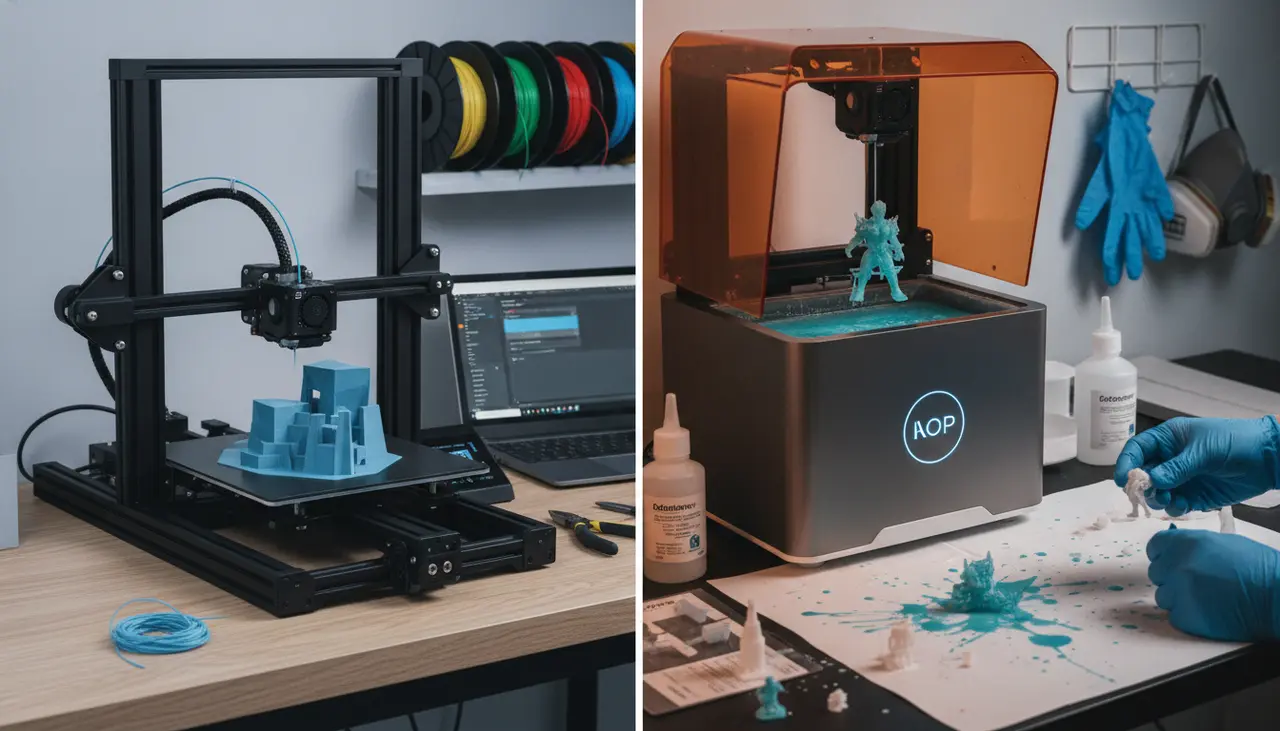
Resin vs FDM Printing: Choosing Your First Machine
Disclosure: This post contains affiliate links. If you make a purchase through these links, we may earn a small commission at no extra cost to you. We only recommend hardware like Anycubic and Bambu Lab based on their reputation in the maker community.
Choosing your first 3D printer is a bit like choosing your first car. You want something reliable that fits your lifestyle, but the "specs" can feel like a foreign language. If you’ve been browsing the web, you’ve likely seen two main types of machines: those that use spools of plastic "string" (FDM) and those that use vats of liquid "goop" (Resin).
So, which one should you bring into your home?
In short: FDM (Fused Deposition Modeling) is the best choice for hobbyists who want to make functional parts, household gadgets, and large toys with minimal mess. Resin (SLA/LCD) is the superior choice for makers who want incredible, professional-grade detail for tabletop miniatures, jewelry, or intricate art pieces, but it requires more safety precautions and cleanup.
Is This Guide for You?
If you are currently staring at open browser tabs of different printers and feeling overwhelmed by the choice between "detail" and "durability," you are in the right place. We are going to look past the marketing jargon and focus on what it’s actually like to live with these machines in a home environment.
Comparison at a Glance: Resin vs. FDM
| Feature | FDM Printing (Filament) | Resin Printing (Liquid) |
|---|---|---|
| Material Used | Thermoplastic (PLA, PETG, etc.) | Liquid Photopolymer Resin |
| Surface Quality | Visible layer lines | Smooth, injection-mold quality |
| Ease of Use | High (Plug and play options) | Moderate (Requires washing/curing) |
| Mess Factor | Very Low | High (Chemicals and drips) |
| Safety Needs | Basic ventilation | Gloves, masks, and high ventilation |
| Durability | High (Good for mechanical parts) | Moderate (Can be brittle) |
FDM Printing: The Reliable Workhorse
FDM stands for Fused Deposition Modeling. Think of it like a very precise, automated hot glue gun. It melts plastic filament and layers it down to build your object.
If you want a machine that can sit on a desk in your home office and print a replacement bracket for your dishwasher or a giant superhero helmet, FDM is your friend. Modern machines, like those from Bambu Lab, have made this process incredibly "smart," often leveling themselves so you don't have to.
Best for:
- Functional items: Brackets, hooks, and organizers.
- Large-scale projects: Cosplay armor or large toys.
- The "Clean" Hobbyist: There are no liquids to spill, and the post-processing usually involves just snapping off a few plastic supports.
When starting with FDM, your biggest choice will be your material. If you're wondering where to begin, check out our guide on PLA vs PETG: Which Filament Should You Start With? to see which plastic fits your first project.
Resin Printing: The Detail King
Resin printing works by using a high-resolution screen to "cure" liquid plastic with UV light, layer by layer. The results are breathtaking. If you want to print a 28mm wizard for your D&D campaign and see the individual buckles on his boots, a resin printer is the only way to go.
However, resin printing is a "wet" hobby. You will be working with liquid chemicals that have a strong odor and require skin and lung protection. Brands like Anycubic offer fantastic entry-level machines that produce professional results, but you must be prepared for the cleanup.
Best for:
- Miniatures: High-detail figurines and statues.
- Jewelry Design: Intricate patterns for casting.
- Visual Prototypes: Items that need to look perfectly smooth without sanding.
The Reality Check: Tradeoffs and Safety
The "Stink" and Safety
FDM printers using PLA filament are generally odorless and safe for indoor use with a cracked window. Resin, however, emits Volatile Organic Compounds (VOCs). You must wear nitrile gloves and a mask when handling uncured resin, and the printer should ideally live in a garage, a shed, or a room with a dedicated ventilation system.
Post-Processing
With FDM, you take the part off the bed, and you're mostly done. With Resin, the part comes out dripping in chemicals. You have to wash it in isopropyl alcohol and then "cure" it under a UV lamp (or in the sun) before it is safe to touch with bare hands.
Cost of Ownership
While you can find great options in The Best 3D Printers for Beginners This Year, remember that the printer is just the start. Resin users need to budget for gloves, alcohol, and resin filters. FDM users mostly just need to buy more spools of filament.
Common Beginner Mistakes to Avoid
- Ignoring the Workspace: Don't buy a resin printer if you live in a small studio apartment with no ventilation. The fumes are not just smelly; they can be irritating.
- Skipping the Leveling: On many budget FDM printers, if the bed isn't perfectly level, the print won't stick. Take the time to learn this "paper test" early on.
- Touching the Resin Build Plate: Always wear gloves! Even if you think you’re being careful, a single drop of resin on your skin can cause a reaction over time.
- Buying the Cheapest Filament: Ultra-cheap filament often has inconsistent diameters, which leads to clogs in your nozzle. Stick to reputable brands for your first few rolls.
Frequently Asked Questions
Which is cheaper to run? Generally, FDM is cheaper. Filament is inexpensive, and you don't have the "hidden costs" of cleaning supplies and safety gear that resin requires.
Can I print functional parts in resin? Yes, but "standard" resin is often quite brittle. For functional parts like tools or hinges, you would need to buy specialized "tough" or "engineering" resins, which are more expensive.
Which one is faster? It depends! FDM speed depends on the size of the object. Resin speed depends on the height of the object. If you are printing ten miniatures at once, a resin printer will finish them all at the same time, whereas an FDM printer would take ten times longer.
Final Thoughts
If you are looking for a low-stress entry into the hobby and want to make "stuff" for your house, go with FDM. It’s forgiving, clean, and incredibly rewarding.
If you are an artist, a gamer, or a miniature painter who demands perfection in every tiny detail, go with Resin. Just promise us you'll invest in a good pair of gloves and a ventilated space!
Whichever path you choose, remember that 3D printing is a journey of learning. Your first few prints might fail, and that’s okay. That’s just part of becoming a maker. Happy printing!