
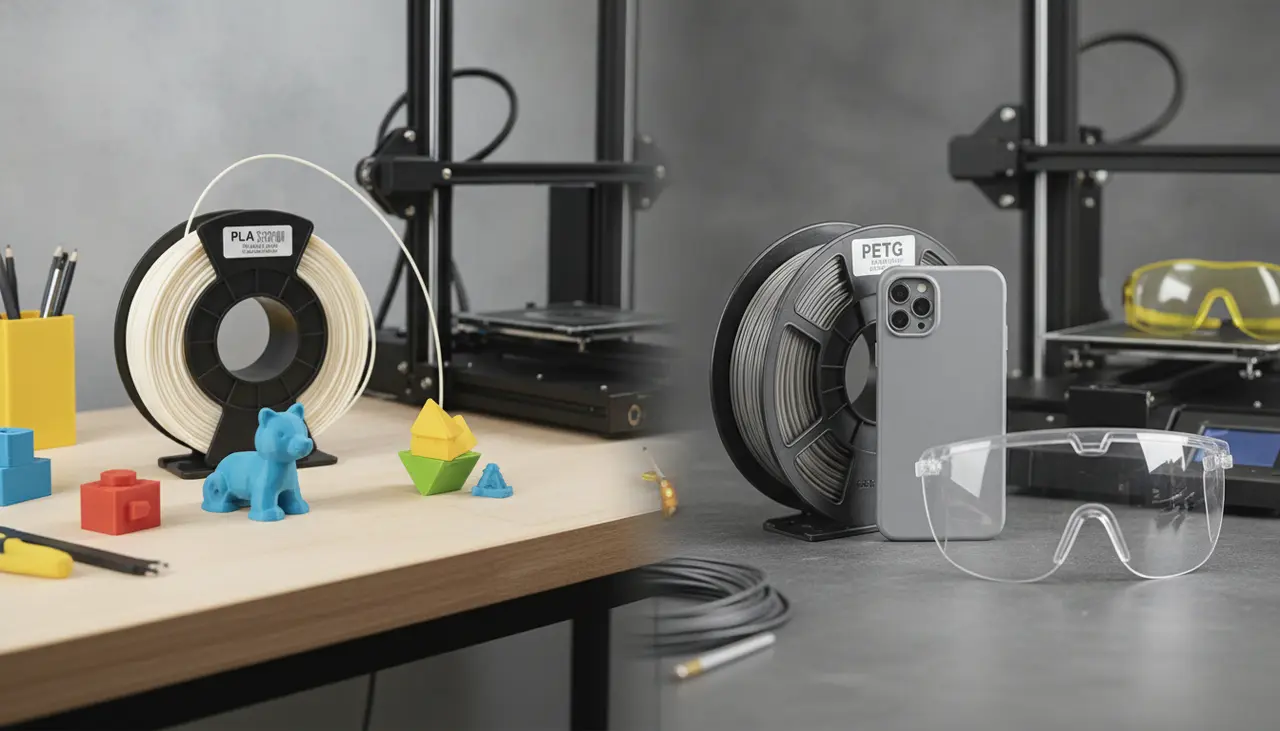
PLA vs PETG: Which Filament Should You Start With?
Disclosure: This post contains affiliate links. If you purchase through these links, we may earn a small commission at no extra cost to you, helping us keep the lights on at The 3D Print Nook.
If you are just starting your 3D printing journey, PLA (Polylactic Acid) is almost always the right choice for your first few spools. It is the most user-friendly material, requires lower temperatures, and is incredibly forgiving for beginners. PETG (Polyethylene Terephthalate Glycol) is an excellent "next step" material for when you need parts that are more durable, flexible, or heat-resistant, but it requires a bit more patience to tune your settings.
Welcome to the Neighborhood, Maker!
Stepping into the world of 3D printing is a bit like setting up a new home workshop. You’ve got your printer, you’ve downloaded your first STL file, and now you’re staring at a wall of colorful plastic spools. It’s exciting, but also a little overwhelming!
This guide is designed for the creative hobbyist who wants to understand the "why" behind their materials. Whether you are printing toys for the kids, organizers for the kitchen, or replacement parts for a DIY project, choosing between PLA and PETG is the first big decision you'll make. Think of this as a friendly chat over coffee—we’re going to help you pick the filament that will make your printing experience a success, not a headache.
Before you dive deep into materials, make sure you have the right machine for the job by checking out The Best 3D Printers for Beginners This Year: Start Your Making Journey Today.
PLA vs. PETG: At a Glance
| Feature | PLA (Polylactic Acid) | PETG (Polyethylene Terephthalate Glycol) |
|---|---|---|
| Ease of Use | Very High (Great for beginners) | Moderate (Requires fine-tuning) |
| Printing Temp | 190°C – 220°C | 230°C – 250°C |
| Bed Temp | 40°C – 60°C (Optional) | 70°C – 85°C (Required) |
| Durability | Rigid but brittle | Strong and slightly flexible |
| Heat Resistance | Low (Softens at 60°C) | Moderate (Softens at 80°C) |
| Odor/Safety | Sweet, corn-like (Low VOCs) | Mostly odorless (Low VOCs) |
PLA: The Reliable First Choice
PLA is the "gold standard" for home hobbyists. Derived from renewable resources like corn starch or sugar cane, it’s a bio-plastic that is generally considered the safest and easiest material to use in a home environment.
Why we love it for beginners:
- No "Warps" or Woes: PLA doesn't shrink much as it cools, which means your prints are less likely to peel off the bed or warp at the corners.
- Low Temperature: Most basic 3D printers can handle PLA without any upgrades.
- Detail King: If you are printing detailed miniatures or decorative items, PLA captures fine lines beautifully.
- Friendly Fragrance: Unlike some industrial plastics, PLA smells slightly sweet (like toasted marshmallows) when printing.
Best for:
- Display models and figurines.
- Prototypes and "fit tests."
- Low-stress household organizers.
- Educational projects for kids.
PETG: The Tougher Older Sibling
If PLA is the easy-to-clean finger paint of the 3D printing world, PETG is the permanent marker. It’s the same plastic used in water bottles, but modified with "Glycol" to make it easier to print. It’s tougher, handles the sun better, and won’t melt if you leave it in a hot car.
Why you might want to try it:
- Strength and Flex: PETG is less brittle than PLA. If you drop a PLA part, it might shatter; a PETG part is more likely to bounce.
- Weather Resistance: If you’re printing a birdhouse or a garden tool, PETG is the way to go. It handles UV rays and rain much better than PLA.
- Heat Tolerance: PETG can withstand higher temperatures before it starts to deform.
Best for:
- Outdoor items (planters, bird feeders).
- Functional parts (brackets, mechanical hinges).
- Kitchen items (though check for food-safe certifications on specific brands).
- Items that will live in a garage or car.
Making the Switch: Slicer & Software Guides
When you move from PLA to PETG, you can't just hit "print" with the same settings. You'll need to head into your Slicer (like Cura or PrusaSlicer) and make a few tweaks. PETG likes to be printed a bit slower, and it loves a "hotter" bed to stay stuck down.
If you're still getting used to your software, we recommend reading The 3D Print Nook Master Buying Guide: How to Choose Your First Home 3D Printer to ensure your hardware is capable of the higher temperatures PETG requires.
Common Beginner Mistakes to Avoid
- The "Oily Finger" Trap: Both PLA and PETG hate skin oils. If you touch your build plate, the filament won't stick. Wipe your bed with 70% or higher Isopropyl Alcohol before every print.
- Ignoring the "Hiss and Pop": Filament is like a sponge; it absorbs moisture from the air. If you hear popping sounds while printing, your filament is "wet." Store your spools in airtight bins with desiccant packs.
- PETG Over-Adhesion: Be careful! PETG sticks too well to glass beds and can actually rip chunks of glass out. Use a glue stick or hairspray as a "release agent" when printing PETG on glass.
- The Cooling Fan Mistake: PLA loves a 100% cooling fan to keep details sharp. PETG usually prefers a lower fan speed (around 30-50%) to ensure the layers bond together strongly.
FAQ: Quick Answers for New Makers
Is PLA or PETG safer for a home office? Both are considered low-emission compared to industrial plastics like ABS. However, it is always best practice to print in a well-ventilated room. PLA is generally the most pleasant to be around.
Can I use the same nozzle for both? Yes! A standard 0.4mm brass nozzle works perfectly for both. Just ensure you purge the old filament thoroughly when switching, as PETG requires a higher temperature to melt than PLA.
Which is cheaper? PLA is usually the most affordable, with high-quality spools available on Amazon or MatterHackers for $18-$25. PETG is typically only a few dollars more, making it very accessible.
Ready to start?
If you're looking for your very first roll, we recommend a high-quality PLA from brands like Hatchbox, Overture, or Polymaker. They offer consistent diameters and great colors that make your first printing experience feel like magic. Happy printing!