
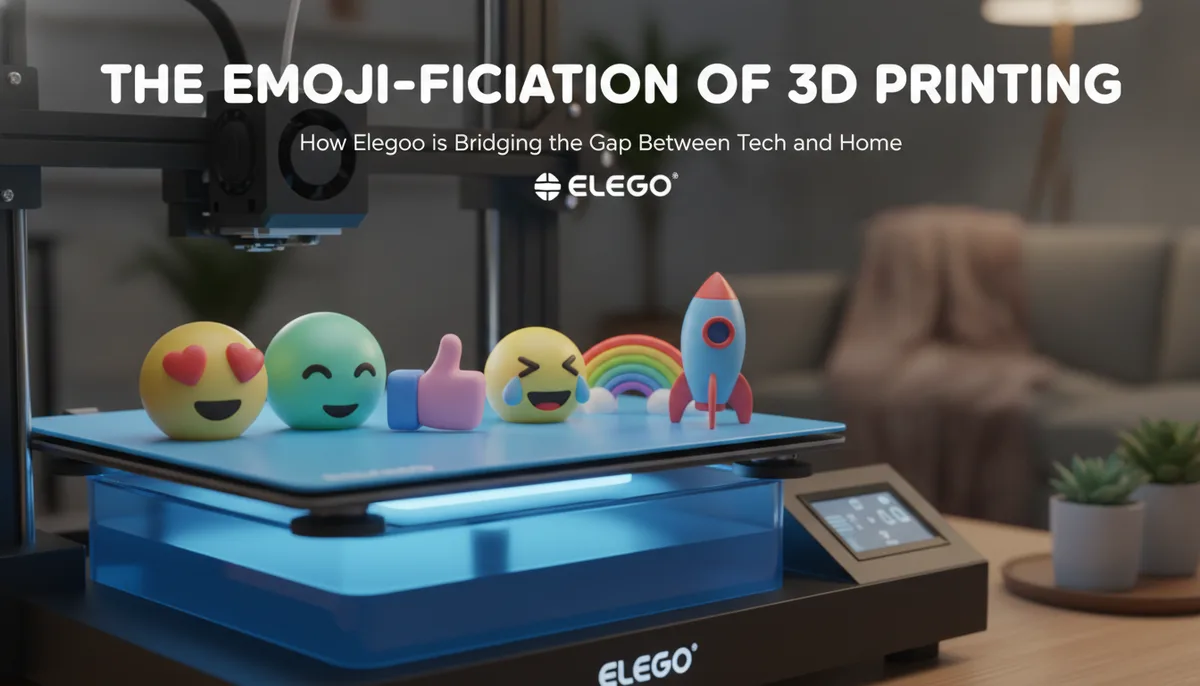
The Emoji-fication of 3D Printing: How Elegoo is Bridging the Gap Between Tech and Home
When Elegoo unveiled the world’s first officially licensed emoji®-themed 3D printer, it wasn’t just launching another version of an existing machine. The company was testing a much bigger idea: the democratization of manufacturing through the lens of pop culture. For years, the 3D printing industry has been dominated by "black box" machines—industrial-looking towers of metal and wires that, while functional, often feel more at home in a machine shop than a modern living room.
By partnering with the emoji® brand, Elegoo is attempting to dismantle the "intimidation barrier" that has kept 3D printing in the niche hobbyist corner. This strategy marks a shift from selling a tool to selling an experience, aiming to introduce more people to the world of additive manufacturing by making the hardware feel as familiar as a smartphone app.
The Psychology of the Emoji: A Universal Entry Point
The choice of the emoji® brand is far from accidental. In the digital age, emojis have become the closest thing humanity has to a universal language. They represent emotion, simplicity, and instant communication. When you place these icons on a 3D printer, you are psychologically repositioning the device.
Historically, 3D printers have been marketed based on technical specifications: microns, millimeters per second, and nozzle temperatures. While these specs matter to the "maker" community, they can be alienating to a parent looking for a creative outlet for their child or a teacher wanting to spark interest in STEM. The emoji® branding signals that the machine is approachable, fun, and intended for everyone, not just those with an engineering background.
Breaking the "Maker" Stereotype
For a long time, the 3D printing demographic has been relatively narrow: tech-savvy individuals, engineers, and dedicated hobbyists. Elegoo’s move into licensed branding suggests that the market for these users is reaching a plateau, and the next stage of growth lies in the general consumer market.
By integrating the emoji® brand, Elegoo is targeting:
- Families: Parents who want to engage in "edutainment" at home.
- Educators: Schools looking for equipment that feels less like industrial machinery and more like a classroom tool.
- Casual Creators: Individuals who want to print "fun things" (like desk toys or household organizers) without feeling like they need a degree in mechanical engineering.
This shift mirrors the evolution of the home computer. In the 1970s, computers were for hobbyists who built them from kits. By the 1990s, they were colorful, branded appliances designed for the average household. Elegoo is pushing 3D printing toward that "appliance" phase.
The Foundation: Why the Neptune 4 Series?
Underneath the bright colors and iconic yellow faces, the emoji®-themed printer is built on the Neptune 4 architecture. This is a crucial detail. For this experiment to work, the machine cannot just look good; it has to perform flawlessly.
The Neptune 4 series is known for its high-speed capabilities (up to 500mm/s) and its use of Klipper firmware, which allows for smoother, faster prints. For a beginner, speed is a vital feature. One of the biggest hurdles for new users is the long wait time associated with 3D printing. By using a high-speed platform, Elegoo ensures that the "instant gratification" associated with modern technology—and emojis themselves—is maintained.
If you are just starting your journey with a machine like this, understanding the materials you use is just as important as the hardware. For beginners, we recommend reading our guide on PLA vs PETG: Which Filament Should You Start With? to ensure your first prints are successful.
From Workshop to Living Room: Safety and Aesthetics
One of the primary reasons 3D printers have stayed in garages and basements is their aesthetic and environmental footprint. Traditional printers are often noisy and utilitarian. By adding a licensed, recognizable brand, Elegoo is making a play for "shelf space" in the home.
However, moving a printer into a common living area brings up questions of safety and air quality. While the Neptune 4 is a reliable open-frame printer, users should consider the environment where they operate it. If you plan on printing in a shared family space, it is worth investigating whether is an enclosure necessary for your 3D printer? to manage noise and potential fumes, especially if you move beyond basic PLA filaments.
The Educational Impact: Making STEM Accessible
The emoji® printer is a powerful tool for the classroom. Teachers often struggle to bridge the gap between "technical skills" and "fun." Emojis provide an immediate hook. A student might be intimidated by the task of "prototyping a mechanical component," but they are often excited to "3D print a custom 3D emoji for their backpack."
Once the student is engaged with the fun aspect, the teacher can introduce the underlying science:
- Geometry: Understanding X, Y, and Z axes.
- Material Science: How plastic melts and solidifies.
- Software Skills: Using slicers and CAD software to manipulate objects.
This "Trojan Horse" approach to education—hiding the learning inside the fun—is exactly what the emoji® partnership facilitates.
Practical Use Cases for the Emoji-Themed Printer
While the branding is playful, the utility of the machine remains high. Owners of the emoji®-themed Neptune 4 can dive into a variety of projects that go beyond simple icons:
- Customized Stationery: Print pencil holders, bookmarks, and paperclips featuring favorite emojis.
- Home Decor: Create unique light switch covers or drawer pulls that add a pop of personality to a child's room.
- Prototyping: Even with a "fun" exterior, this printer is capable of producing functional prototypes for household repairs or inventions.
For those looking to push the limits of what their machine can do in terms of detail, choosing the right material is key. While the emoji printer is a FDM (filament) machine, many makers eventually branch out into resin for higher detail. You can explore the 10 best 3D printing resins for detail and durability if you decide to expand your workshop.
The Future: Is Licensed Branding the New Standard?
Elegoo’s experiment with the emoji® brand is likely just the beginning. If successful, we can expect to see more collaborations between 3D printer manufacturers and global brands. Imagine a Disney-themed printer that comes pre-loaded with "safe" models, or a LEGO-compatible machine designed specifically for brick enthusiasts.
This trend signifies the maturing of the 3D printing industry. We are moving away from the era of "generic machines" and into the era of "curated ecosystems." For the consumer, this means better support, more intuitive interfaces, and hardware that reflects their personal style.
Conclusion: A Bold Step Toward the Mainstream
Elegoo’s decision to choose emoji® as the face of their new initiative is a savvy move that recognizes the importance of cultural relevance in technology. By stripping away the industrial aesthetic and replacing it with something globally recognized and inherently "friendly," they are inviting a whole new generation of makers to the table.
The emoji®-themed Neptune 4 isn't just a printer; it's a statement that 3D printing is no longer a dark art practiced by a few, but a creative tool available to everyone. Whether you're a parent, a teacher, or just someone who loves the digital language of icons, this machine represents a bridge between the complex world of manufacturing and the simple joy of creation.