
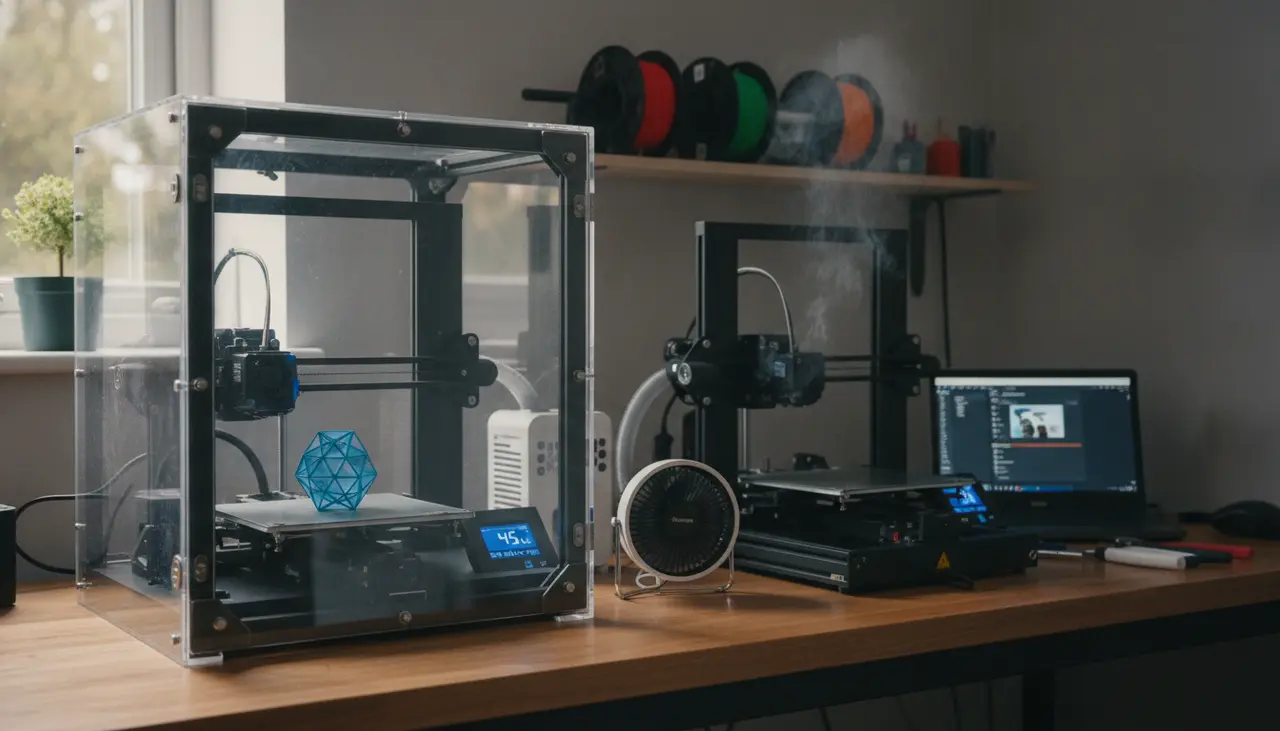
Is an Enclosure Necessary for Your 3D Printer? A Guide to Safety and Quality
Disclosure: This post contains affiliate links. If you click through and make a purchase, The 3D Print Nook may earn a small commission at no extra cost to you. We only recommend tools and materials that add value to your making journey.
The Short Answer: Do You Need an Enclosure?
Whether a 3d printer enclosure is "necessary" depends entirely on what you are printing and where your printer lives. If you are exclusively printing with PLA in a room without drafts, you can usually get by without one.
However, if you plan to print with high-temperature materials like ABS or ASA, or if you want to protect your printer from dust, pets, and toddlers, an enclosure becomes an essential upgrade. It serves three main purposes: maintaining a stable ambient temperature to prevent warping, containing potentially harmful fumes and odors, and providing a physical safety barrier for your workspace.
Who Is This Guide For?
This guide is for the creative hobbyist who has just unboxed their first FDM or resin printer and is starting to wonder why some prints warp or why the room smells like melting plastic. If you’re looking to move beyond basic PLA prints and want to ensure your hobby remains safe and consistent, you’re in the right place.
Why Consider a 3D Printer Enclosure?
When you first start out, 3D printing feels like magic. But as you spend more time with your machine, you realize it’s a delicate balance of thermodynamics. Here is why an enclosure might be the next logical step for your "Nook."
1. Temperature Stability and Warping
FDM printing relies on plastic cooling at a controlled rate. If a cold breeze from a window hits your print, the plastic shrinks too quickly, causing the corners to lift off the build plate (warping). An enclosure traps the heat generated by the bed, creating a warm "micro-climate" that keeps your layers happy and adhered.
2. Fume and Odor Management
While PLA is generally considered low-odor, materials like ABS or certain resins release Volatile Organic Compounds (VOCs) and Ultra-Fine Particles (UFPs). An enclosure allows you to contain these fumes and, if equipped with a fan and hose, vent them safely out a window. If you're working with resin, check out our guide on the 10 Best 3D Printing Resins for Detail and Durability to understand which materials might require more airflow.
3. Noise Reduction and Safety
Let’s be honest: 3D printers can be noisy. A solid enclosure acts as a muffler for those stepper motor "songs." More importantly, it keeps curious cats and little fingers away from a 200°C nozzle and a moving gantry.
Comparing Enclosure Types
| Feature | Tent-Style (Fabric) | Acrylic / Rigid | DIY (e.g., IKEA Lack) |
|---|---|---|---|
| Portability | High (Foldable) | Low | Low |
| Heat Retention | Moderate | High | Moderate |
| Visibility | Limited (Small windows) | Excellent (Clear walls) | Custom |
| Fire Resistance | Often uses flame-retardant liners | Low (unless treated) | Variable |
| Price Point | Budget-friendly | Premium | Low cost + High effort |
Which Enclosure is Right for You?
Best for Beginners and Budget Makers: The Tent-Style Enclosure
These are often made by brands like Creality or Comgrow. They are essentially specialized "tents" made of fire-resistant fabric with a reflective interior.
- Pros: Very affordable, easy to assemble, and provides excellent fire safety.
- Cons: They aren't the prettiest to look at, and visibility is limited to a small plastic window.
Best for Aesthetics and Visibility: Acrylic Enclosures
If you love watching your prints come to life (and who doesn't?), a clear acrylic box is the way to go. These are often sold as kits for specific printers like the Prusa or Bambu Lab series.
- Pros: Looks professional, offers 360-degree visibility, and is very sturdy.
- Cons: More expensive and can be prone to cracking if not handled carefully during assembly.
Best for the Dedicated DIYer: The IKEA Lack Hack
A staple in the maker community, this involves using two or three IKEA Lack side tables and some 3D-printed brackets to create a custom housing.
- Pros: Highly customizable and rewarding to build.
- Cons: Requires significant time to print parts and assemble; not inherently fire-rated.
Choosing the Right Material for the Job
Your need for an enclosure is heavily dictated by your choice of filament. Before investing in an enclosure, it’s helpful to understand the materials you'll be using most. For a deep dive into the basics, read our comparison on PLA vs PETG: Which Filament Should You Start With?.
- PLA: No enclosure needed (sometimes even discouraged as it can cause heat creep).
- PETG: Beneficial in drafty rooms but not strictly necessary.
- ABS/ASA: Mandatory. These materials will almost certainly warp or crack without a heated, enclosed environment.
Common Beginner Mistakes with Enclosures
- Ignoring Electronics Overheating: Inside an enclosure, the ambient temperature rises. This is great for the print, but bad for the printer's power supply and motherboard. If you run long prints in a hot enclosure, consider moving your electronics to the outside.
- Poor Ventilation: An enclosure traps fumes, but it doesn't make them disappear. Always ensure you have a plan for where those fumes go when you open the door after a print.
- Forgetting Maintenance Access: Don't build or buy an enclosure so tight that you can't reach the levelers or the extruder. You’ll still need to perform "Troubleshooting Basics" like clearing clogs or leveling the bed.
Frequently Asked Questions
Can I use a cardboard box as an enclosure? While many makers start this way, it is a significant fire hazard. 3D printers involve high heat and electricity; using a highly flammable material like cardboard as a permanent enclosure is not recommended.
Will an enclosure make my printer silent? It will significantly dampen the high-pitched whirring and fan noise, but it won't make it completely silent. For an apartment dweller, it’s usually enough to make the difference between a "noisy" room and a "quiet" one.
Does a resin printer need an enclosure? Resin printers benefit more from "ventilation hoods" than heat-retention enclosures. However, keeping a resin printer in a temperature-controlled enclosure can help the resin stay at its optimal viscosity for printing.
Final Thoughts
An enclosure is one of those upgrades that changes the way you interact with your hobby. It moves the printer from being a "machine on a desk" to a "controlled laboratory." If you're ready to tackle more complex materials or simply want a cleaner, safer workspace, a 3d printer enclosure is a fantastic investment in your creative future.
Happy printing, and remember: keep that bed level and your filament dry!