
10 Best 3D Printing Resins for Detail and Durability: A Maker’s Guide
Disclosure: This post contains affiliate links. If you click through and make a purchase, The 3D Print Nook may earn a small commission at no additional cost to you. We only recommend tools and materials we believe provide genuine value to the maker community.
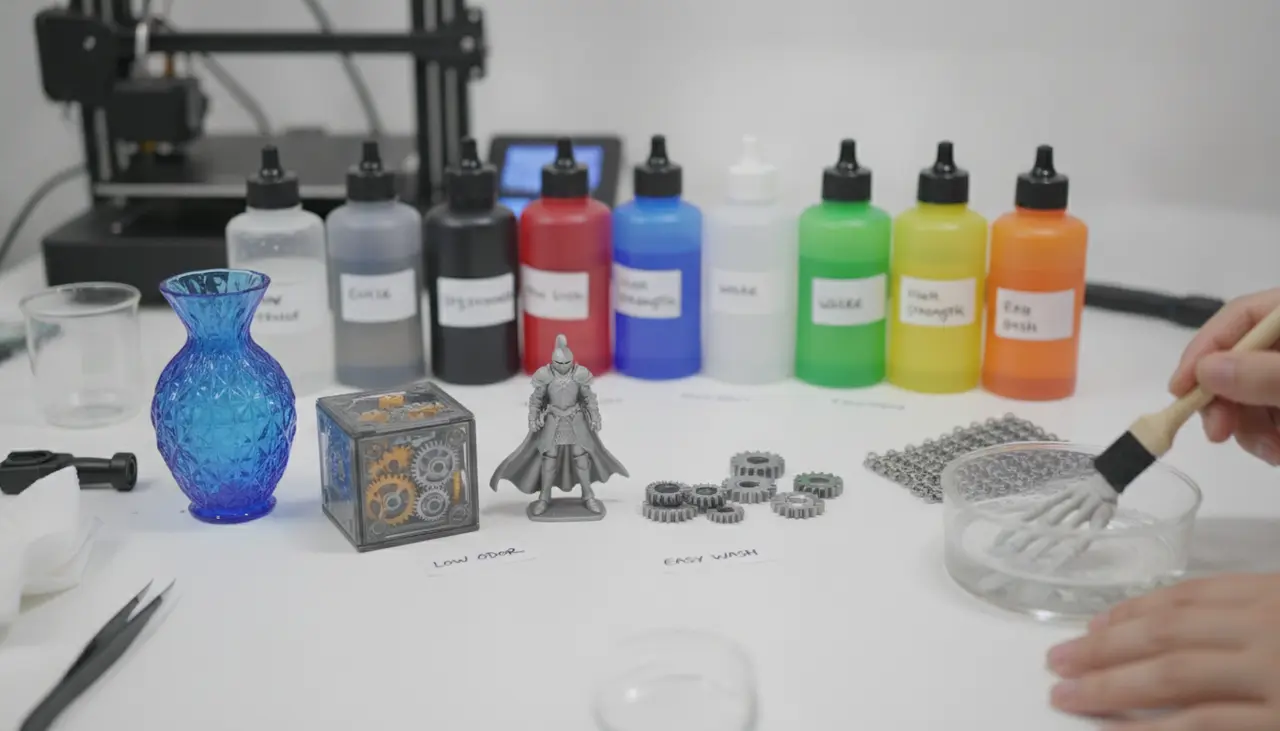
Choosing the best 3d printing resin often feels like a balancing act. You want the razor-sharp detail for your tabletop miniatures, but you also don't want them to shatter the moment they’re bumped off a table. For most home hobbyists, the ideal resin is one that balances low odor, ease of post-processing, and enough "give" to survive a little handling.
If you are looking for a quick recommendation, Elegoo Standard Resin and Anycubic Craftsman are the go-to choices for high-detail hobby prints on a budget. For those needing functional parts that can take a beating, Siraya Tech Blu or Sunlu ABS-Like offer the durability required for mechanical prototypes. If you’re printing in a small apartment and want to avoid the smell of high-percentage Isopropyl Alcohol (IPA), Water-Washable resins are your best bet for a cleaner, simpler workflow.
Who Is This Guide For?
This guide is written for the creative hobbyist who has moved past the initial "how does this work?" phase and is ready to optimize their prints. Whether you are printing intricate jewelry, gaming miniatures, or replacement parts for around the house, understanding the chemistry of your vat is the next step in your journey.
Comparison of Top Resin Choices
| Resin Name | Primary Benefit | Cleanup Method | Best Use Case |
|---|---|---|---|
| Elegoo Standard | Great Value | IPA (91%+) | General figurines |
| Siraya Tech Fast | Print Speed/Reliability | IPA (91%+) | Large batches, prototyping |
| Anycubic Craftsman | Ultra-Fine Detail | IPA (91%+) | 4K/8K Miniatures |
| Sunlu ABS-Like | Impact Resistance | IPA (91%+) | Functional parts, toys |
| Elegoo Water-Washable | Easy Cleanup | Plain Water | Apartment printing |
| Siraya Tech Blu | Extreme Toughness | IPA (91%+) | Mechanical components |
| Phrozen Aqua 8K | Professional Detail | IPA (91%+) | High-end display pieces |
| Anycubic Water-Wash+ | Low Odor | Plain Water | Beginners, small spaces |
| Resione K Tough | Flexibility/Strength | IPA (91%+) | Snap-fit joints |
| Ministry of Resin Durable | User-Friendly Toughness | IPA (91%+) | Gaming minis that won't break |
1. The Best All-Rounder: Elegoo Standard Resin
If you are just starting out, this is the "old reliable" of the resin world. It’s affordable, widely available on Amazon, and has very predictable settings in slicers like Lychee or ChituBox. It captures detail beautifully, though it can be a bit brittle if over-cured.
2. The Speed Demon: Siraya Tech Fast
Siraya Tech Fast is a favorite in the maker community because it lives up to its name. It’s less viscous than other resins, meaning it flows better and allows for slightly faster lift speeds. It’s also surprisingly durable for a "standard" resin, making it less prone to chipping.
3. The Detail King: Anycubic Craftsman 8K
When every scale on a dragon or every wrinkle on a face matters, Anycubic Craftsman is designed to minimize light bleed. This ensures that the UV light only cures exactly where it’s supposed to, resulting in crisp edges that make 8K printers truly shine.
4. The Apartment-Friendly Choice: Elegoo Water-Washable
Cleaning resin prints usually involves smelly baths of IPA. Water-washable resins allow you to rinse your prints in a container of plain water (which must still be disposed of properly as hazardous waste!). It’s a great way to reduce the chemical footprint of your hobby.
5. The "Oops-Proof" Resin: Sunlu ABS-Like
Standard resin is often like glass—strong but brittle. ABS-like resins add a bit of plastic-like flexibility. If you drop a miniature printed in Sunlu ABS-Like, it’s much more likely to bounce than to shatter. This is a game-changer for tabletop gamers who travel with their armies.
6. The Engineering Choice: Siraya Tech Blu
If you are moving away from art and toward utility, Siraya Tech Blu is legendary. It’s a "tough" resin that can withstand significant stress. While it requires a bit more care (keeping the resin warm helps), the results are parts you can actually use in a workshop.
7. High-Resolution Specialty: Phrozen Aqua 8K
Designed specifically to complement high-resolution screens, Phrozen Aqua 8K has a very low shrinkage rate. This means your prints stay true to the size of your digital model, which is vital for parts that need to fit together.
8. The Low-Odor Option: Anycubic Water-Washable+
While no resin is truly "scent-free," the Water-Washable+ formula from Anycubic is significantly less pungent than traditional resins. Combined with the water-cleanup, it makes the hobby much more approachable for those without a dedicated garage workshop.
9. For Snap-Fit Parts: Resione K Tough
Resione K is a specialty resin that feels more like injection-molded plastic. It has excellent "elongation at break," meaning it can bend quite a bit before it snaps. If you are printing clips or items that need to "click" into place, this is your best bet.
10. The Community Favorite: Ministry of Resin Durable
Ministry of Resin has gained a following for creating a "Durable" line that specifically targets the needs of hobbyists. It’s easy to print, easy to wash, and produces models that feel substantial and sturdy in the hand.
Resin vs. FDM: Which Should You Choose?
If you’re still deciding between a resin printer and a traditional filament printer, it helps to look at the materials. Resin is unmatched for detail, but filament (FDM) is often better for large-scale structural items. For a deeper look at your first material choices, check out our guide on PLA vs PETG: Which Filament Should You Start With?.
Common Beginner Mistakes to Avoid
- The "Sunlight" Trap: Never leave your resin vat uncovered near a window. Even a little ambient UV light can create a "skin" of cured resin in your vat, ruining your next print.
- Improper Disposal: Never pour resin-contaminated wash water or IPA down the drain. Let the resin particles settle, cure them in the sun, and dispose of the solid waste according to local regulations.
- Skipping the PPE: Even "low odor" resins are sensitizers. Always wear nitrile gloves and work in a well-ventilated area. Your future self will thank you!
- Over-Curing: Leaving your prints in a UV curing station for too long can make them extremely brittle and may cause yellowing or cracks.
Frequently Asked Questions
Is resin printing more expensive than filament? Generally, yes. Resin itself is more expensive per kilogram, and you also have to factor in the cost of PPE, cleaning alcohol, and replacement FEP films for your vat.
How should I store my resin? Keep it in its original bottle, tightly sealed, in a cool, dark place. Always shake the bottle well before pouring it into your vat, as the pigments can settle over time.
Can I mix different resins? Yes, many makers create "blends" (like mixing 10% Siraya Tech Blu into standard resin) to add durability. However, always ensure the resins are chemically compatible (SLA/LCD compatible) and realize that you may need to recalibrate your exposure settings.
Whether you're looking for the toughest part or the finest detail, the best 3d printing resin is the one that fits your specific project needs and your home environment. Take it slow, calibrate your settings, and don't be afraid to experiment!